Reminiscing Over Old Projects
Looking back at a door entry system built in 2014 - prototyped at rLab, deployed at Wirehive, and a reminder of the joy of building things that actually work.
4 min read
I’ve been digging through old Tumblr posts recently, and it’s been a strange mix of nostalgia and mild embarrassment. Some of the projects I documented back then were genuinely interesting, even if the writing style makes me cringe a bit now.
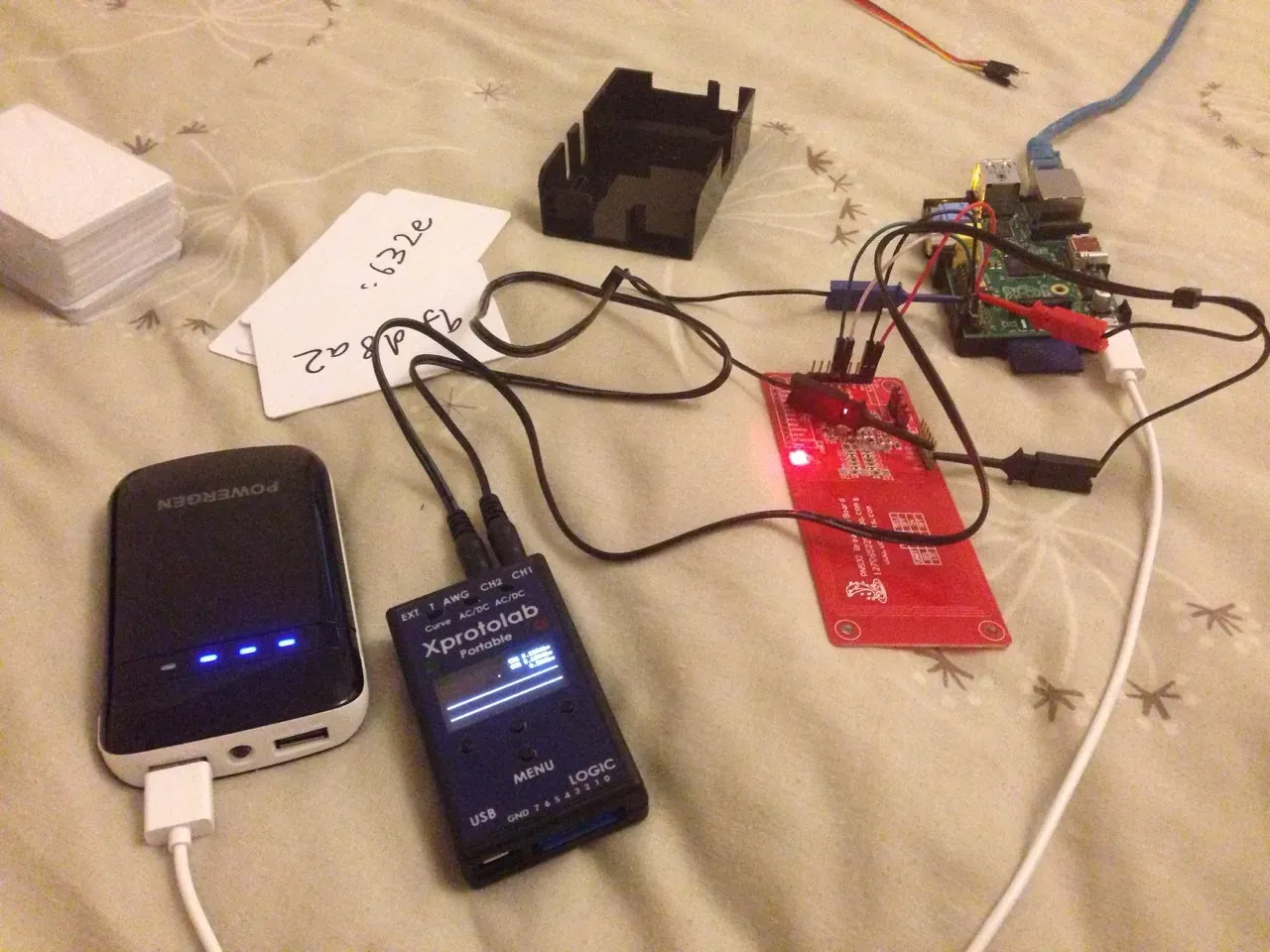
One that caught my eye was a door entry system I built in 2014. The original post is brief - just a photo and a few lines about building contractors quoting £15k to secure 7 doors, and me deciding to do it myself for less than £100 per door.
Looking back, this project captures something I’ve always loved about building things: what you can actually achieve when you’re willing to get your hands dirty.
Prototyping at rLab
The physical prototyping happened at rLab - the Reading makerspace, or “the hackspace” as we called it then. It was a place full of creative people and interesting projects, which suited me a little too well at the time. I could take on more, commit to more, turn it into another place where I was responsible for moving things forward.
But it was also a place where you could actually build things. Where you could pull out a portable oscilloscope (an xprotolab from Gabotronics, which I’d invested in and was making good use of), sit down with a Raspberry Pi, some RFID/NFC readers, and figure out how to make something work.
The makerspace environment was perfect for this kind of experimentation. You could test ideas, iterate quickly, and get feedback from people who understood what you were trying to do. It wasn’t about perfection - it was about making something that worked.
From Prototype to Production
What started as a weekend project at the makerspace ended up being deployed in production across a lot of doors at one of Wirehive’s offices. That’s the part that still makes me smile - taking something that was prototyped on a workbench and actually putting it into real use.
The system used Raspberry Pi boards, RFID/NFC readers, and a simple web interface for managing access. It wasn’t fancy, but it worked. And it cost a fraction of what the contractors had quoted.
There’s something satisfying about that kind of cost difference. Not because it saved money (though it did), but because it demonstrated that the “obvious” solution isn’t always the only one. Sometimes the right answer is to build it yourself.
I’d also argue it was a lot more secure than some current implementations you can buy off the shelf! We digitally signed a payload and stored it on the card, then read it back and validated against a CA on the reader.
The Joy of Building Things That Work
What I remember most about this project isn’t the technical details - it’s the satisfaction of building something that actually worked, that solved a real problem, and that saved a significant amount of money.
There’s a particular kind of joy that comes from taking an idea from prototype to production, especially when it’s something physical that people interact with every day. Every time someone used their RFID card to unlock a door, they were using something I’d built.
That’s the part I miss sometimes - the direct connection between building something and seeing it used. In software, especially at scale, that connection can get lost. But with physical projects like this, it’s immediate and tangible.
Looking Forward
I’ve been thinking about this project recently because I’m starting to document some of these older projects. Not because they’re particularly groundbreaking, but because they represent a different way of working - more hands-on, more experimental, more willing to try things that might not work.
There’s value in that approach, even (or especially) when you’re working at a different scale. The willingness to prototype, to iterate, to build something yourself rather than accepting the “obvious” solution - that’s a mindset that translates well.
By coinicdence I went to use this same mini osciliscope just the other day and sadly it didn’t turn on. At that moment I realised I needed an osciloscope to fix my osciloscope :D