My First 3D Printer
A look back at my first 3D printer from 2013 - lead screws, MDF construction, and a hand lathed nozzle. How times have changed in the world of 3D printing.
5 min read
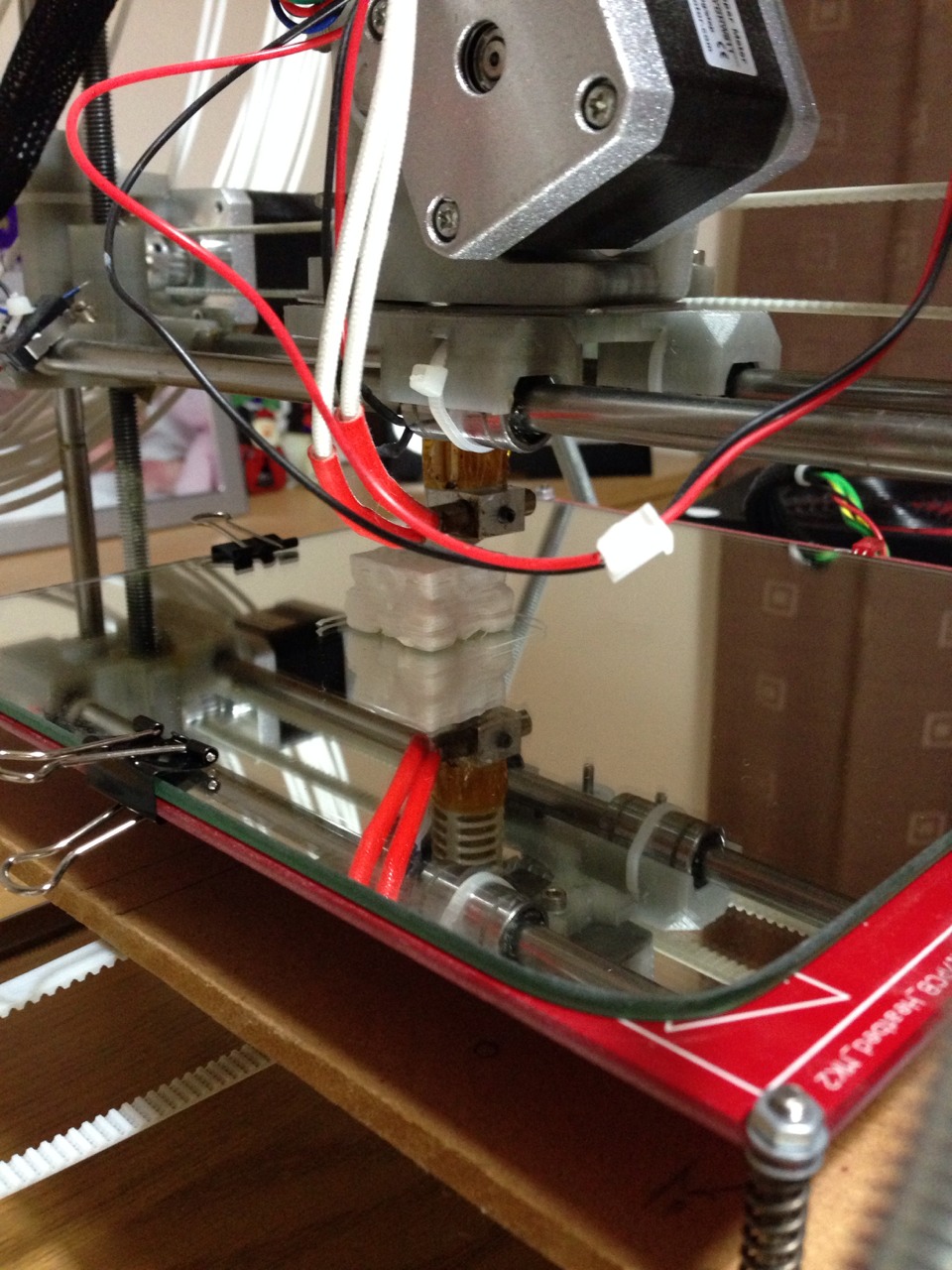
I found an old Tumblr post from December 2013 showing my first 3D printer, printing a Weighted Companion Cube. Looking at it now, I’m struck by how much 3D printing has changed in just over a decade.
That first printer was a DIY build - lead screws for movement, MDF for the frame, and a hand lathed nozzle. It was a project, not a product. You didn’t just buy it and start printing. You built it, you calibrated it, you fought with it, and eventually you got it working.
The Early Days
In 2013, 3D printing was still very much in the maker/hacker space. The RepRap project had been around for a few years, and people were building their own printers from kits or scratch. It was a community effort - you learned from forums, shared designs, and helped each other troubleshoot.
My printer had:
- Lead screws for Z-axis movement - precise but slow
- MDF frame - cheap, easy to work with, but not the most rigid material
- Hand lathed nozzle - because you couldn’t just buy quality nozzles easily
- Manual calibration - lots of tweaking, adjusting, and hoping
It was a labor of love. Getting a good print was an achievement. Failed prints were common, and debugging was part of the process. You learned to read the layers, to understand what went wrong, to adjust temperatures and speeds and retraction settings.
How Times Have Changed
Fast forward to today, and 3D printing is almost unrecognizable:
Off-the-Shelf Printers
You can now buy a reliable 3D printer for a few hundred dollars. They come pre-assembled, pre-calibrated, and ready to print. The barrier to entry has dropped dramatically.
Better Materials
PLA and ABS were pretty much your only options in 2013. Now there’s PETG, TPU, carbon fiber composites, wood-filled filaments, metal-filled filaments, and countless specialty materials. The material science has advanced enormously.
Better Software
Slicing software has improved dramatically. What used to require manual tweaking and guesswork is now automated. Supports are generated intelligently, print settings are optimized automatically, and the whole process is much more user-friendly.
Better Reliability
Modern printers are more reliable. Auto-leveling beds, better extruders, improved cooling, and smarter firmware have made successful prints much more common. Failed prints still happen, but they’re the exception rather than the rule.
Lower Prices
That first printer cost me hundreds of hours of time, plus materials. Today, you can get a decent printer for less than the cost of a gaming console. The technology has become accessible.
What We’ve Gained
The democratization of 3D printing has been remarkable. What was once a niche hobby for makers and engineers is now accessible to anyone. Schools use 3D printers for education. Small businesses use them for prototyping. Hobbyists use them for everything from cosplay to home improvement.
The community is still there, but it’s grown. There are more resources, more tutorials, more designs available. The knowledge that was hard-won in 2013 is now easily accessible.
What We’ve Lost
But there’s something we’ve lost too. That first printer taught me a lot about how 3D printing actually works. Building it, calibrating it, troubleshooting it - all of that gave me a deep understanding of the process.
Modern printers are more like appliances. You turn them on, load a file, and print. That’s great for accessibility, but it means fewer people understand what’s happening under the hood. When something goes wrong, there’s less understanding of how to fix it.
The DIY aspect is still there if you want it - you can still build printers from kits, still modify and upgrade them. But it’s no longer necessary. You can get great results without understanding the mechanics.
The Weighted Companion Cube
That first print - a Weighted Companion Cube from Portal - was a perfect test object. It had overhangs, it had details, it required supports. Getting it to print successfully felt like an achievement.
Today, printing a Companion Cube would be trivial. Load the file, slice it, print it. But back then, it was a milestone. It proved the printer worked, that all the calibration had paid off, that the hand lathed nozzle was doing its job.
Looking Forward
It’s fascinating to think about where 3D printing will be in another decade. Will we have printers in every home? Will materials continue to improve? Will the technology become even more accessible?
What I know is that the foundation laid by those early DIY printers - the RepRap project, the maker community, the open-source ethos - made all of this possible. The printers we have today stand on the shoulders of those early experiments, those hand lathed nozzles, those MDF frames.
My first printer was a project. Today’s printers are products. But the spirit of making, of experimentation, of building things yourself - that’s still there. It’s just more accessible now.
And that’s a good thing. More people can make things. More ideas can become reality. More problems can be solved with a 3D printer and some filament.
But I’ll always have a soft spot for that first printer - the one with lead screws and MDF and a hand lathed nozzle. It taught me that sometimes the best way to understand technology is to build it yourself.
How times have changed indeed.